The 3-Day GSC Triage: Your First 72 Hours After a Google Core Update

Google's May 2026 core update is live — and r/SEO is full of indie devs losing 50-60% of their traffic overnight. Here's the exact 3-day diagnostic workflow to run before you touch a single line of content.
The Situation

On May 21, 2026, Google began rolling out its second broad core update of the year 1. The rollout takes up to two weeks, and the r/SEO subreddit is already packed with indie developers watching their traffic charts collapse.
One post from three days ago: "Had a site that was regularly getting around 50k sessions per day for months, dropped overnight to about 18k sessions per day this past Friday — the day after the Core update was released" 2. That's a 64% drop in 24 hours.
The natural instinct is to fix things immediately — rewrite pages, swap keywords, fire off new content. That instinct is wrong. Making changes during an active rollout is like adjusting your car's alignment while it's still skidding. You can't diagnose a pattern until the movement stops.
The right first move is a 3-day diagnostic triage. Here's exactly what that looks like, pulled from verified recovery playbooks and community-proven methods 3 4.
링크 미리보기를 불러오는 중…

Day 1 — Baseline Snapshot

Do not rewrite anything yet. Your only job today is to capture the pre-update state before Google Search Console's data window drifts.
Open GSC → Performance → Search results and set the date range to 7 days before the first volatility day (for this update, that means May 14–20, 2026). Export the full page-level data — clicks, impressions, average position, and CTR — for all URLs that had at least one impression.
Repeat the same export in GA4: organic sessions, conversions, and revenue by landing page for the same pre-spike window.
Then take screenshots of your top 20 ranking positions in whatever rank tracker you use. GSC data lags 48–72 hours, so this moment is your only clean real-time pre-update reference. Once the rollout finishes, you won't be able to reconstruct "before" cleanly.
Output for Day 1: One spreadsheet with your pre-update baseline, saved and timestamped.

Day 2 — Pull the Drop List

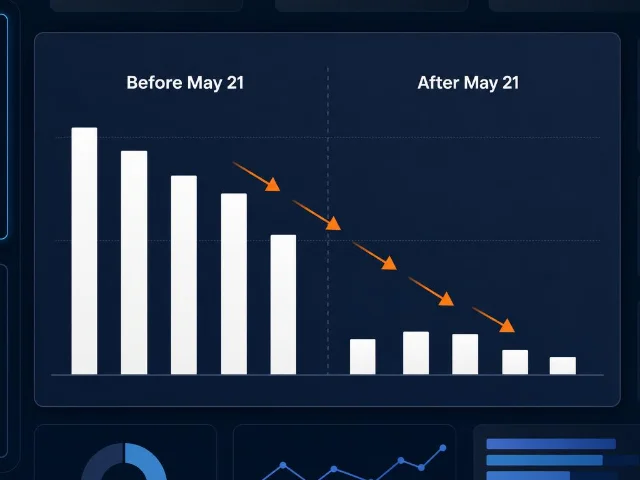
Now switch GSC to the 7-day post-update period (May 21–27). In the Pages tab, sort by "Clicks" descending, then enable comparison view to see the click delta from your Day 1 baseline.
Export every URL with a click decline greater than 30%. On a site with decent traffic, expect 50–150 URLs on this list. These are your recovery priorities.
Don't bother with URLs that lost 5–10% — the signal-to-noise ratio during an active rollout is too low. Focus on the pages that took a real hit.
Output for Day 2: A prioritized list of impacted URLs sorted by click loss severity.
Before vs after traffic comparison chart
GSC comparison view showing click decline between pre-update and post-update windows — AI-generated illustration.

Day 3 — Tag by Issue Type

Assign exactly one primary issue tag to every URL on the drop list. Based on recovery pattern data, the five most common categories are:
Issue TagWhat It Looks Like
Thin contentUnder 300 words, no original insight, reads like a summary of other pages
Duplicate / near-duplicateSame core content on multiple URLs (common on e-commerce and SaaS docs sites)
OutdatedReferences 2023 or earlier data, stale examples, no freshness signal
Scaled / AI-generatedPages that were bulk-published without editorial review
Weak E-E-A-TNo named author, no verifiable credentials, no cited sources, no About page
E-E-A-T issues account for the highest share of core update ranking drops. If you're unsure which tag fits, default to "Weak E-E-A-T" — Google's updated quality rater guidelines have been penalizing sites that lack demonstrated expertise and trust signals 5.
Output for Day 3: A tagged spreadsheet where every priority URL has exactly one issue category. This becomes your content action plan for the weeks ahead.
링크 미리보기를 불러오는 중…

What to Do After Day 3

Once the rollout completes (expected around early June) and data stabilizes for at least one full week, start executing against your tagged list:
  • E-E-A-T issues first: Add named authors with verifiable LinkedIn or industry publication profiles. Insert original photos, proprietary data, or first-hand test results. Audit the top 30 priority URLs and replace vague claims with linked primary sources — aim for 3–5 per 1,000 words.
  • Thin / duplicate / outdated: Consolidate or rewrite. Merge cannibalizing pages into one strong canonical. Noindex or 410 truly low-value URLs — target a 20–30% reduction in indexed thin pages.
  • Technical fixes: Run PageSpeed Insights on your top 20 recovery URLs. Fix LCP and INP issues. Refresh internal linking from high-authority pages to recovery-priority URLs.
One warning from the r/SEO community: "From what I've seen, recovery usually happens when people stop thinking page by page and start thinking site-wide trust. Removing thin content helps, but it's the overall authority signal that moves the needle" 6.
Don't panic-edit during the rollout. Run the 3-day triage, build your priority list, and execute systematically once the dust settles.
링크 미리보기를 불러오는 중…

이 콘텐츠를 둘러싼 관점이나 맥락을 계속 보강해 보세요.

  • 로그인하면 댓글을 작성할 수 있습니다.