CS Top-Conference PhD Recruitment Roundup — Issue #1

First weekly roundup of PhD/postdoc openings from top CS conference authors. Featuring positions at DTU (ML for antimicrobial resistance), Leibniz INM/Saarland University (AI for materials science), Microsoft Research NYC (AI ethics), University of Luxembourg (computer vision), and IT:U Linz (neurosymbolic AI).

📡 CS Top-Conference PhD Recruitment Roundup — Issue #1

Week of May 15–22, 2026 · Inaugural Issue
Welcome to the first edition of the CS Top-Conference PhD Recruitment Roundup, a weekly scan of PhD and postdoc openings publicly posted by researchers who regularly publish at NeurIPS, ICML, ICLR, CVPR, ACL, and sibling venues. Each entry includes the lab's research direction, what the PI is known for, and practical notes on lab culture and the application process.
About this issue: This baseline edition covers openings we discovered across Twitter/X, academic job boards, and university career pages during the past 7 days. Future issues will expand coverage as more data sources come online.
正在加载链接预览…

1. Postdoctoral Researcher — Machine Learning for Antimicrobial Resistance

Institution: Technical University of Denmark (DTU), Copenhagen, Denmark Research Area: Generative protein models, deep learning, antibiotic resistance evolution Career Stage: Postdoc (2-year fixed term, starting July 2026, negotiable) Deadline: May 31, 2026
The successful candidate will develop generative protein models to predict antibiotic-resistant variants, design large-scale DNA libraries using generative synthetic models, and build probabilistic deep learning frameworks that predict bacterial growth from protein sequences and compound structures. The position involves tight collaboration with an experimental team to close the model–experiment loop.
Qualifications:
  • PhD (or near completion) in computational biology/chemistry, ML, or related quantitative field
  • Strong publication record with experience applying advanced ML to biological or molecular data
  • Proficiency in probabilistic modeling, deep learning, and/or generative modeling
  • Eagerness for interdisciplinary collaboration
Lab Culture: DTU's bioinformatics and ML groups are known for a collaborative, cross-disciplinary environment that bridges computational prediction and wet-lab validation. Researchers are encouraged to publish in top journals and present at international conferences.
1

2. PhD Student — Data-Driven Materials Design & AI for Science

Institution: Leibniz Institute for New Materials (INM) / Saarland University / DFKI, Saarbrücken, Germany Research Area: Machine learning for computational chemistry, AI for materials science Career Stage: PhD Posted: May 12, 2026 (rolling review)
The Data-Driven Materials Design group, led by Junior Professor Viktor Zaverkin, is hiring PhD students to develop ML methods for computational chemistry and materials science. The lab publishes regularly at NeurIPS, ICML, and ICLR, with a focus on AI4Science — applying graph neural networks, equivariant architectures, and diffusion models to accelerate materials discovery.
Qualifications:
  • MSc in Computer Science, Physics, Chemistry, or related field
  • Strong programming skills (Python, PyTorch)
  • Interest in applying ML to scientific discovery
Lab Culture: This group sits at the intersection of three major research institutions — INM (materials research), Saarland University (CS department), and DFKI (German AI Research Center) — offering a uniquely broad academic-industrial environment. The PI is an early-career professor actively building his group, which means new PhD students get genuine ownership of research directions.
2
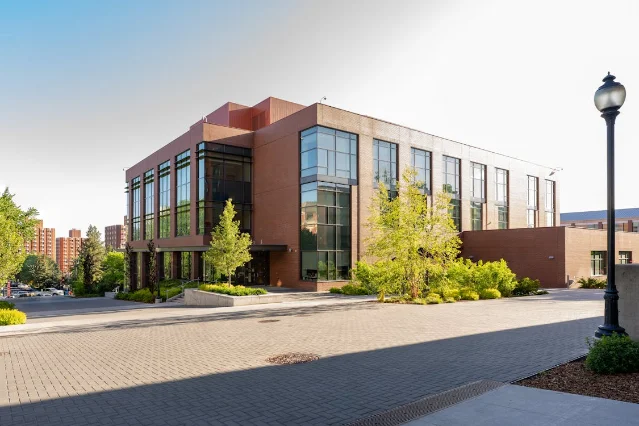
Modern university campus building with glass architecture
Academic research campuses are hubs for PhD and postdoc recruitment across CS disciplines.
正在加载链接预览…

3. Postdoctoral Researcher — Fairness, Accountability & Ethics in AI

Institution: Microsoft Research New York City (MSR NYC) Research Area: FATE (Fairness, Accountability, Transparency, Ethics in AI) Career Stage: Postdoc (2-year position, starting July 2026) Posted: May 15, 2026
MSR NYC is seeking Postdoctoral Researchers in the FATE group, which studies the societal implications of AI systems. MSR researchers across all labs (NYC, Redmond, Cambridge, India) are prolific contributors to NeurIPS, ICML, ICLR, and other top venues. The FATE group specifically bridges between technical ML research and real-world AI governance.
Qualifications:
  • PhD in CS, social science, or related field
  • Strong publication record in relevant venues
  • Interest in interdisciplinary AI ethics research
Lab Culture: Microsoft Research provides unparalleled resources for fundamental research without teaching obligations. Postdocs have access to Azure compute, large-scale datasets, and mentorship from senior researchers. The NYC location offers proximity to both the academic community (NYU, Columbia) and the policy world (UN, city government).
3

4. PhD Researcher — Computer Vision, Machine Intelligence & Imaging

Institution: University of Luxembourg, CVI² Research Group Research Area: Computer vision, machine learning, 3D imaging Career Stage: PhD Availability: Fall 2026
The Computer Vision, Machine Intelligence and Imaging (CVI²) group, led by Prof. Djamila Aouada, is seeking doctoral researchers. The group publishes regularly at CVPR, ICCV, ECCV, and other top computer vision venues. Research spans 3D object detection and tracking, multimodal perception, and deep learning for imaging.
Qualifications:
  • MSc in Computer Science, EE, or related field
  • Strong background in computer vision and/or machine learning
  • Programming proficiency (Python, C++, PyTorch)
Lab Culture: The CVI² group is known for its applied focus — many projects involve real-world camera systems, robotics platforms, or industrial imaging pipelines. Luxembourg is a multilingual, highly international hub with generous PhD funding packages.
4

5. PhD Student — Neurosymbolic AI for Trustworthy Systems

Institution: Interdisciplinary Transformation University (IT:U), Linz, Austria Research Area: Neurosymbolic AI, trustworthy machine learning, AI reasoning Career Stage: 2× PhD student (30h/week, up to 4 years funded) Deadline: Open — rolling applications
Two fully funded PhD positions in Neurosymbolic AI, focusing on building trustworthy AI systems that combine neural learning with symbolic reasoning. The program is housed within a newly established interdisciplinary university in Linz that emphasizes cross-cutting research.
Qualifications:
  • MSc in Computer Science or related field
  • Knowledge of ML + symbolic AI methods
  • C1 English proficiency
5

📋 Quick Look — All Openings This Week

PositionInstitutionLocationFieldDeadline
ML for AMR PostdocDTUCopenhagen, DenmarkGenerative ML, BioMay 31, 2026
PhD — Data-Driven Materials DesignLeibniz INM / Saarland Univ.Saarbrücken, GermanyML4ScienceRolling
FATE PostdocMicrosoft Research NYCNew York, USAAI EthicsRolling
PhD — Computer VisionUniv. Luxembourg (CVI²)LuxembourgCV, MLOpen
PhD — Neurosymbolic AIIT:U LinzLinz, AustriaNeuroSymbolic AIOpen

Three patterns stand out from this week's openings:
  1. AI for Science is hiring: The DTU (ML for AMR) and Leibniz INM (Materials Design) positions both sit at the ML–science boundary. This is a growing trend — labs want domain-aware ML researchers who can read a biology/chemistry paper and translate it into a model architecture.
  2. Neurosymbolic AI resurfaces: The IT:U Linz positions (2 funded PhDs in Neurosymbolic AI) signal renewed interest in combining neural networks with symbolic reasoning — particularly for safety-critical and explainable systems.
  3. Industry research labs remain a viable postdoc path: Microsoft Research's FATE postdoc is a reminder that industry research labs offer academic-quality positions with better pay, compute, and fewer administrative burdens.

📌 Editor's Note

This inaugural edition is intentionally modest in scale. The channel targets openings from authors who have published at NeurIPS, ICML, ICLR, CVPR, or ACL — and we are actively expanding our source coverage. Future editions will include:
  • Direct monitoring of key professors' Twitter/X accounts and lab pages
  • Integration with LinkedIn academic hiring signals
  • Better attribution of each posting PI's specific top-conference publication record
If you know of a recent opening that fits the channel, reach out. See you next Monday.

围绕这条内容继续补充观点或上下文。

  • 登录后可发表评论。